•    
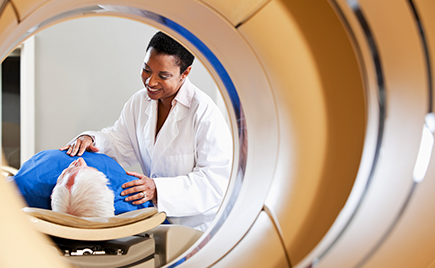
    The Radiology Cares™ campaign is designed to help radiology professionals become more comfortable interacting directly with their patients, and to help patients become more comfortable with their radiology experiences. Direct communication between radiologists and patients is essential to improving patients’ awareness of the integral role radiologists play in their overall healthcare. Even more importantly, direct interactions with radiologists will enhance patients’ understanding and comfort with the tests and procedures they are undergoing. Ultimately, this will allow patients to make better decisions about their healthcare.  
      
    626 Pledges
     (as of 05/13/13) 


    Vision
    Patients are the primary focus of radiologic care.   

    Mission
    The Radiology Cares campaign mission is to encourage and facilitate radiologists’ meaningful engagement in the patient experience. 

    Goals
    To promote: 

    • Alignment of radiology practice with patients’ needs and best interests. 
    • Optimal patient experience throughout the continuum of their radiologic care.  
    • Effective communications with patients and other healthcare providers, thus empowering patients to make informed decisions regarding their medical care. 

    Tenets
    Radiology professionals: 

    • Care for and about our patients. 
    • Treat every patient as we would a neighbor, friend or family member. 
    • See the patient behind the image. 
    • Align radiologic practice to serve our patients’ best interest. 
     
     
  • Video Series: "Radiology Cares: The Untold Future"

  • An entertaining three-episode series illustrating why you want to become more visible to your patients. In this series, you'll meet a radiology resident who gets a reality check to be more patient involved. 
    Episode 1

    Vid1 
    Episode 2

    Vid2 
    Episode 3

    Vid3 
  • Resources

  • Use resources from these toolkits to learn how to become more patient-centered in your practice, to encourage your colleagues to join the movement and to improve awareness of radiologists’ essential role in the patient care continuum. 

     
  • chic

    Educational Toolkit

    Your index to literature about the movement to become patient centered from experts, scientific journals, medical trade publications and mainstream consumer media.

    chic

    Presentation Toolkit

    Customizable PowerPoint presentation decks to help you convey the importance of radiologists being patient centered to your colleagues and communities.

    chic

    RadiologyInfo.org 

    Direct your patients to RadiologyInfo.org  for information on radiology procedures, treatments and therapies. RadiologyInfo.org details over 115 procedures and counting. 

    chic

    Contact

    RadiologyCares@rsna.org with your questions/comments about Radiology Cares or to share your patient-centered radiology activities. 

We appreciate your comments and suggestions in our effort to improve your RSNA web experience.

Name (required)


Email Address (required)


Comments (required)


Discounted Dues: Eligible North American Countries 
Belize
Costa Rica
Dominican Republic
El Salvador
Grenada
Guatamala
Haiti
Honduras
Jamaica
Netherlands Antilles
Nicaragua
Panama
St.Lucia
St. Vincent & Grenadines
Afghanistan
Albania
Algeria
Angola
Armenia
Azerbaijan
Bangladesh
Belarus
Belize
Benin
Bhutan
Bolivia
Bosnia & Herzegovina
Botswana
Bulgaria
Burkina Faso
Burundi
Cambodia
Cameroon
Cape Verde
Central African Republic
Chad
China
Colombia
Comoros
Congo, Dem. Rep.
Congo, Republic of
Costa Rica
Cote d'Ivoire
Djibouti
Dominica
Domicican Republic
Ecuador
Egypt
El Salvador
Eritrea
Ethiopia
Fiji
Gambia, The
Georgia
Ghana
Grenada
Guinea
Guinea-Bissau
Guatemala
Guyana
Haiti
Honduras
India
Indonesia
Iran
Iraq
Jordan
Jamaica
Kazakhstan
Kenya
Kiribati
Kosovo*
Kyrgyzstan
Lao PDR
Laos


Latvia
Lebanon
Lesotho
Liberia
Macedonia
Madagascar
Malawi
Maldives
Mali
Marshall Islands
Mauritania
Mauritius
Micronesia, Fed. Sts.
Moldova
Mongolia
Montenegro
Morocco
Mozambique
Myanmar
Namibia
Nepal
Netherlands Antilles
Nicaragua
Niger
Nigeria
Pakistan
Panama
Papua New Guinea
Paraguay
Peru
Phillippines
Rwanda
Samoa
Sao Tome & Principe
Senegal
Somalia
South Africa
Sri Lanka
St Lucia
St Vincent & Grenadines
Sudan
Suriname
Swaziland
Syria
Tajikistan
Tanzania
Thailand
Timor-Leste
Togo
Tonga
Tunisia
Turkmenistan
Uganda
Ukraine
Uzbekistan
Vanuatu
Vietnam
West Bank & Gaza
Yemen
Zambia
Zimbabwe


Tier 1

  • Bed count: 1-400
  • Associate College: Community, Technical, Further Education (UK), Tribal College
  • Community Public Library (small scale): general reference public library, museum, non-profit administration office

Tier 2

  • Bed count: 401-750
  • Baccalaureate College or University: Bachelor's is the highest degree offered
  • Master's College or University: Master's is the highest degree offered
  • Special Focus Institution: theological seminaries, Bible colleges, engineering, technological, business, management, art, music, design, law

Tier 3

  • Bedcount: 751-1 000
  • Research University: high or very high research activity without affiliated medical school
  • Health Profession School: non-medical, but health focused

Tier 4

  • Bed count: 1,001 +
  • Medical School: research universities with medical school, including medical centers

Tier 5

  • Consortia: academic, medical libraries, affiliated hospitals, regional libraries and other networks
  • Corporate
  • Government Agency and Ministry
  • Hospital System
  • Private Practice
  • Research Institute: government and non-government health research
  • State or National Public Library
  • Professional Society: trade unions, industry trade association, lobbying organization