
R&E Foundation
by developing investigators and supporting lifelong innovative research and education.

Your Donation Makes an Impact
Now more than ever, the Foundation’s funding, guidance and support are critical for radiology researchers and educators, and ultimately for improving patient care.
The Foundation works hard to ensure donations are used effectively. We’re happy to show you exactly where donations go, how to donate and why your donation is so important.
Why Your Donation Matters Donate Today
Explore Research and Education Grants
Your donation empowers our investigators to discover new advances in medical imaging and helps support the development of innovative teaching methods.
Explore all the funding opportunities we offer investigators in North America and around the world.
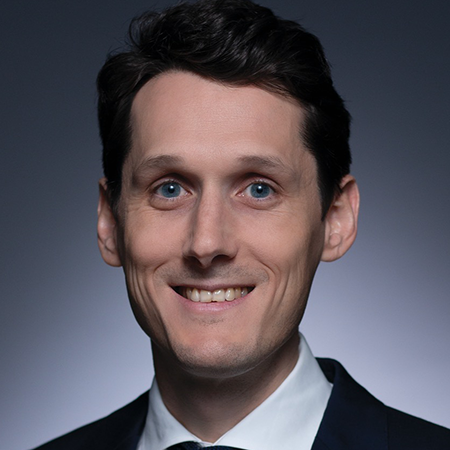
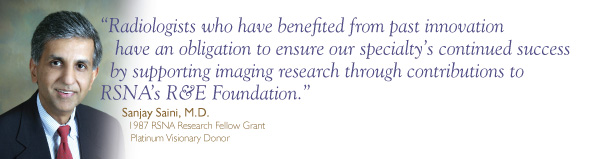
“I want to express my heartfelt appreciation to Canon Medical Systems USA, Inc. and R&E Foundation donors for the invaluable support of my research. The objective of my research is to enhance AI-guided precision medicine approaches and ultimately improve the care and outcomes of patients diagnosed with cancer.”
2023 Canon Medical Systems USA, Inc./RSNA Research Resident Grant Recipient
How to Donate
Our grant recipients have been at the forefront of research for 40 years, ultimately benefiting the patients we serve. We have several different ways you can help fund radiology's future.
R&E Foundation 1984–2025
Celebrating 40+ years of milestones



 Click icon to view image
-
1984—1989
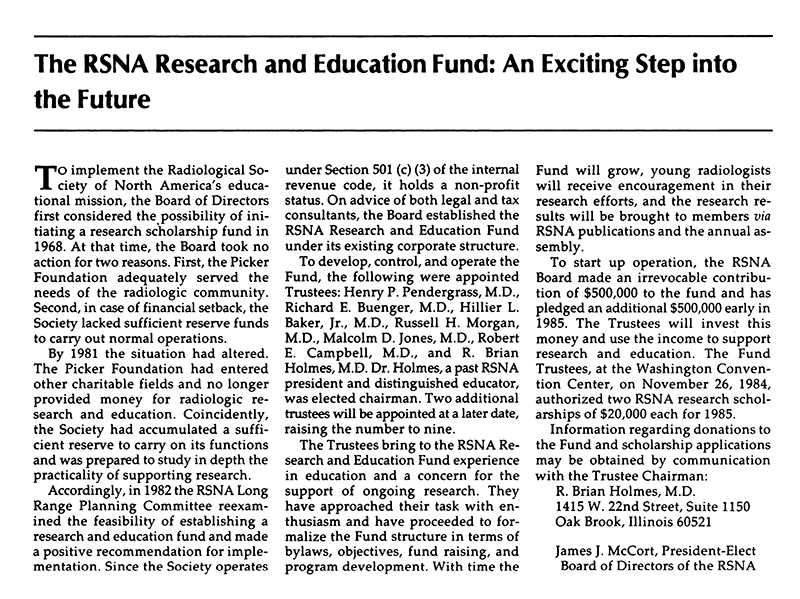
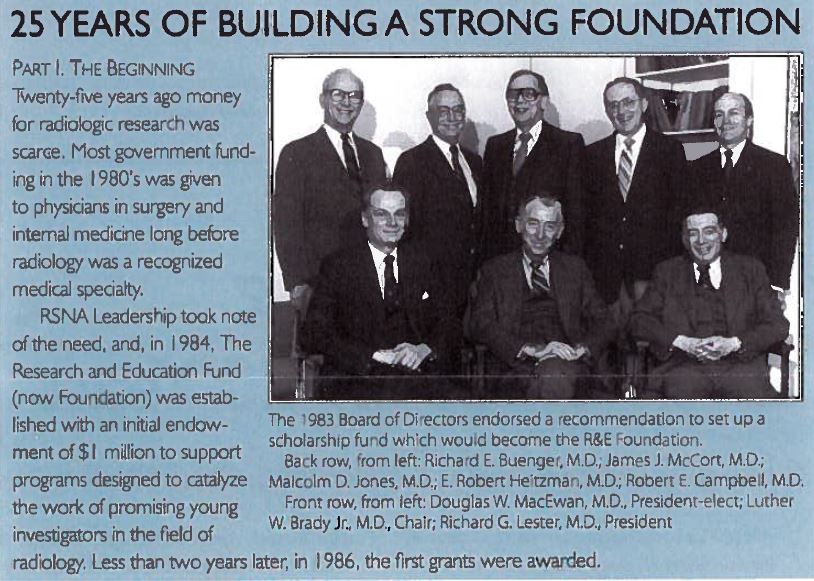
1984RSNA Research & Education Fund is unveiled at the RSNA annual meeting with a $1 million endowment funded by the Society.
1985The Research Fellow grant is developed, and 11 applications were received.
1986The R&E Foundation awards its first two Research Fellow grants totaling $100,000.
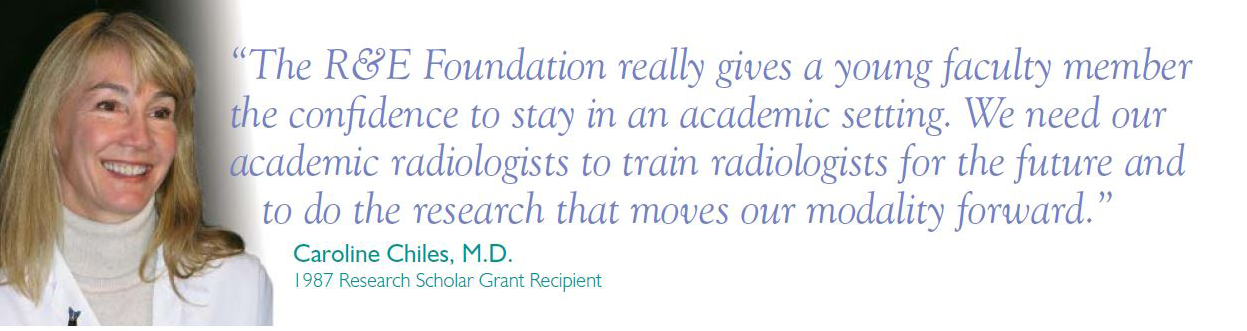
1987Two new grant programs are developed: the Research Seed Grant Program and the Research Scholar Grant Program, both targeted specifically to young faculty.
1988Grant expenditures reach $300,000 in a single year.
1989The Vanguard Program invites companies to fund named grants – 11 founding Vanguard companies commit to supporting grant awards.
-
1990—1995
1990The R&E Foundation awards $1 million to support 51 grant projects.
1991The Research Resident Grant Program is launched, and three research residents are awarded grants.
1992The Research Medical Student grant is established to encourage students to consider research in radiology.
1994The Roentgen Centennial Fellow Award is announced to reach those interested in radiology at every stage in their medical careers.
1995For the first time, grant expenditures for a single year exceed $1 million.
-
1996—2001
1996The Visionaries Program is established. Donation and pledges of over $2.6 million are received from the current and past RSNA leadership to support Foundation programs.
Ten years after awarding its first grant, the Foundation's awards total more than $7 million and more than 200 grant projects are funded.
1997The Roentgen Resident/Fellow Research Award and the Outstanding Researcher Award are established to recognize the efforts and achievements of individuals in radiological research.
The first international seed grant is awarded.
1998RSNA Board of Directors dedicates $10 million to the Foundation to establish an education grant program.
RSNA’s Committee on International Radiology Education (CIRE) established the Derek Harwood-Nash International Fellowship in 1998.
1999The Foundation’s cumulative awards surpass $10 million.
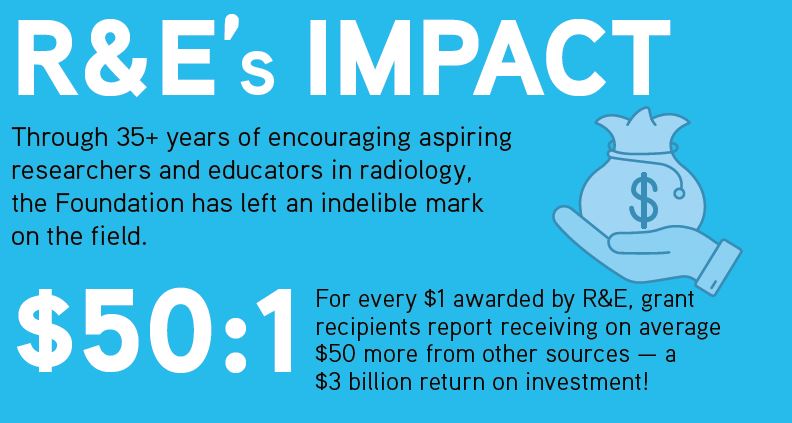
R&E Foundation grant recipient survey indicates that for every $1 awarded by the Foundation, recipients receive an additional $7 in subsequent funding from other sources.
2000The Foundation establishes study sections in the style of the National Institutes of Health to review and rank grant applications.
The Foundation awards three new educational grants.
-
2002—2007
2002The Foundation establishes the Presidents Circle, an annual giving program to recognize individuals whose annual gifts are $1,500 or more.
The Exhibitors Circle Program is developed as a corporate giving program for small and mid-sized exhibitor companies.
2004The Foundation’s cumulative awards surpass $20 million for 522 investigators.
2005The Foundation launches its Silver Anniversary Campaign with the goal of raising $15 million by the 25th anniversary year in 2009.
2006The Visionaries in Practice Program is created to recognize donations from private practice groups and academic departments.
The Foundation's individual giving program is restructured to recognize donors for their cumulative gifts, recognizing all gifts given since the inception of the Foundation.
R&E Foundation grant recipient survey indicates that for every $1 awarded by the Foundation, recipients receive an additional $9 in subsequent funding from other sources.
2007The Foundation’s cumulative awards surpass $24 million to 590 investigators.
-
2008—2013
2008$1.5 million donation from Paul E. Berger, MD, funds individual named endowment in memory of Derek Harwood-Nash, MD.
2009Silver Anniversary Campaign is a success with over $15.4 million raised.
2010The first international education scholar grant is awarded.
2012The R&E Foundation collaborates with the Association of Academic Radiology and the American Society of Neuroradiology to jointly fund grant awards.
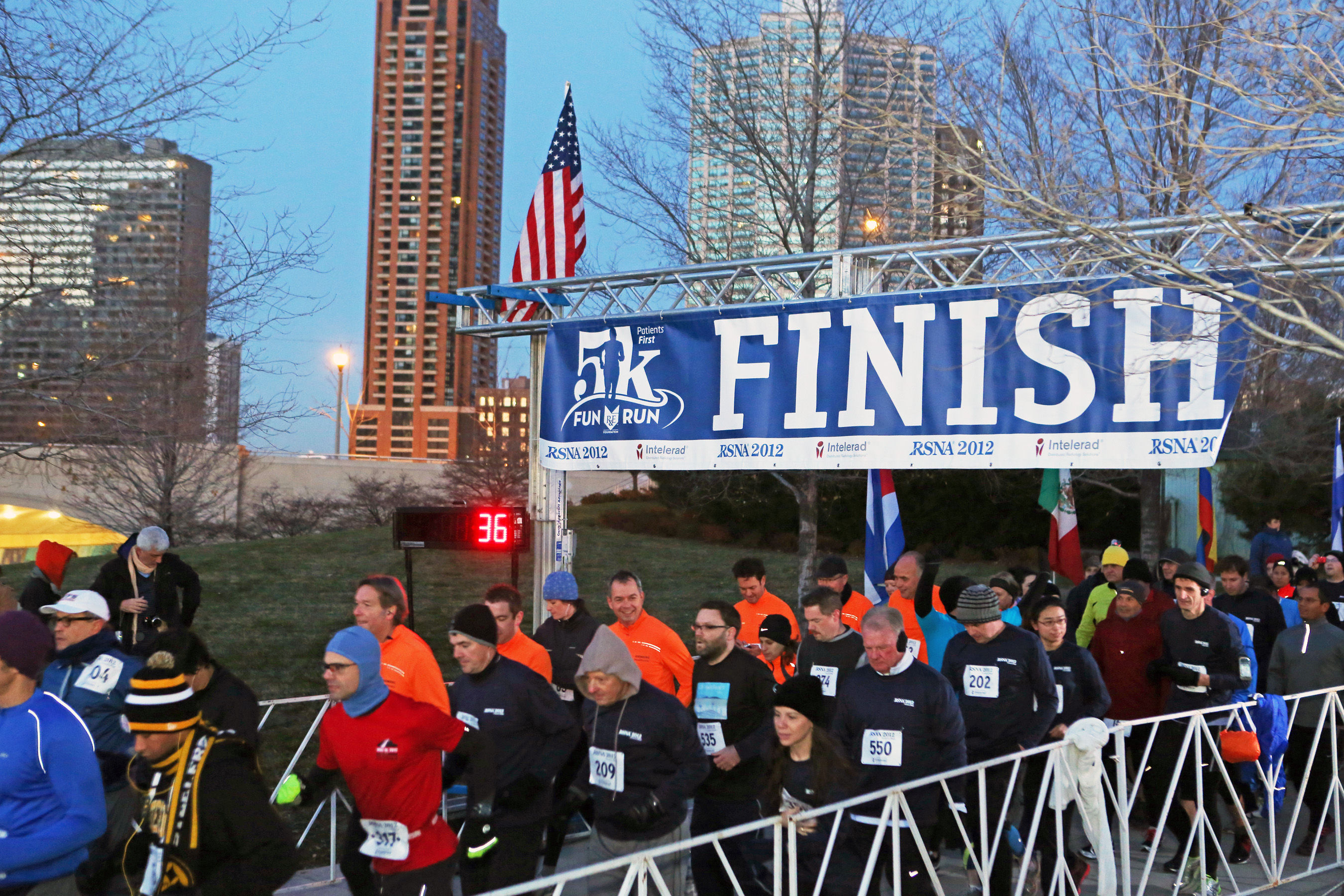
The first R&E Fun Run takes place at RSNA 2012, with 450 participants raising $13,000.
2013The Foundation sets an annual record by funding over $3 million in grants.
-
2014—2019
2014The R&E Foundation launches Inspire-Innovate-Invest: The Campaign for Funding Radiology’s Future® as part of the 100th anniversary of RSNA with a fundraising goal of $17.5 million.
2016$600,000 is donated to fund the named Austin Radiological Research Resident Grant and $800,000 to fund the named Strategic Radiology Research Seed Grant.
Grant funding exceeds $4 million with 101 projects funded.
2017Inspire-Innovate-Invest: The Campaign for Funding Radiology’s Future® is a success with $17.5 million raised.
R&E Foundation grant recipient survey indicates that for every $1 awarded by the Foundation, recipients receive an additional $50 in subsequent funding from other sources.
2018New, multi-year education grant awards designed to promote the development of education are introduced. Resulting educational content and products from these grants are made available as a benefit to RSNA members.
2019The Foundation awards its first, multi-year education grant awards; total research and education grant funding approved by the R&E Foundation Board of Trustees exceeds $5 million.
New funding opportunity boosts early research grants to underrepresented in medicine medical students with up to 10 grants awarded.
-
2020—2024
2021The Foundation receives $2.3 million from the Joan Eliasoph Charitable Remainder Annuity. This is the largest, individual gift endowment received. The estate gift will support one Research Seed Grant and one Research Scholar Grant.
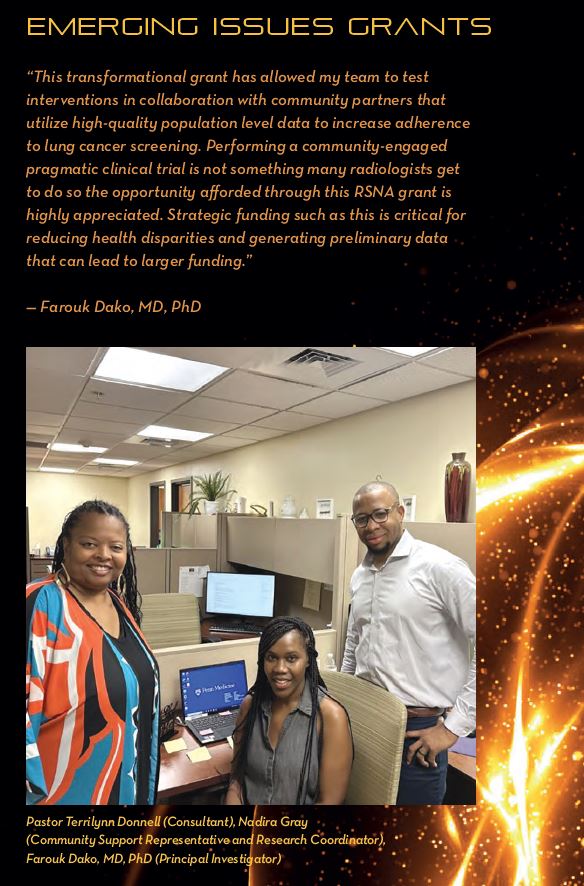
The Emerging Issues grant is introduced to address timely and urgent research topics outside of the existing grant cycle.
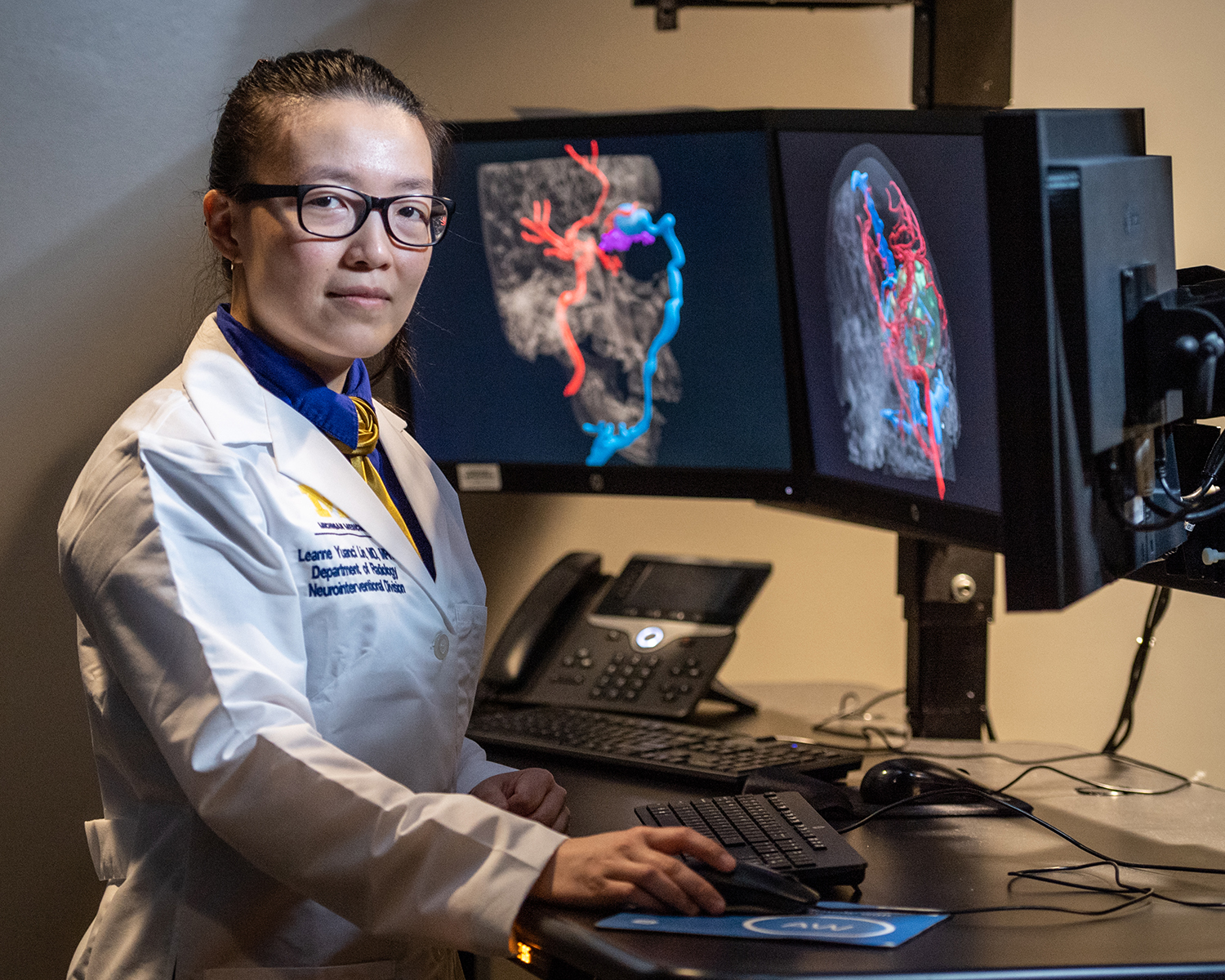
The RSNA R&E Education Project Award is introduced to recognize the impact of educators to supplement funding for new or ongoing education projects. One of the first recipients was Leanne Y. Lin, MD, MPH.
2022The Foundation awards $500,000 in funding for Emerging Issues research focusing on health care disparities and long-term effects of COVID-19.
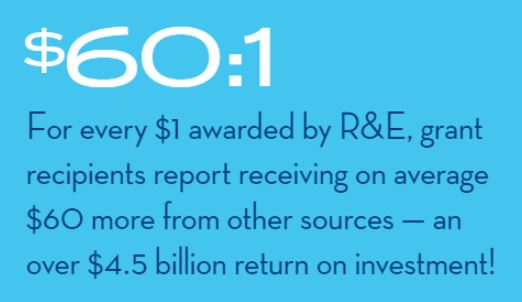
Grant recipients report receiving an average of $60 in future funding from other sources for every $1 received—creating over $5 billion in impact.
The Foundation launches new Leadership Circle giving program, designed as a mechanism for mid-size companies to financially support the Foundation.
2024The Foundation recognizes its 40th anniversary, celebrating over 2,000 grants awarded since its founding, continuing its legacy of funding radiology’s future.



Funding Radiology’s Future ®
RSNA’s Research & Education Foundation provides millions of dollars in funding for radiology research and education every year, with more than $92 million awarded to grantees since 1984.